A certificate is not a marketing line. It is the difference between believing a stone and knowing it.
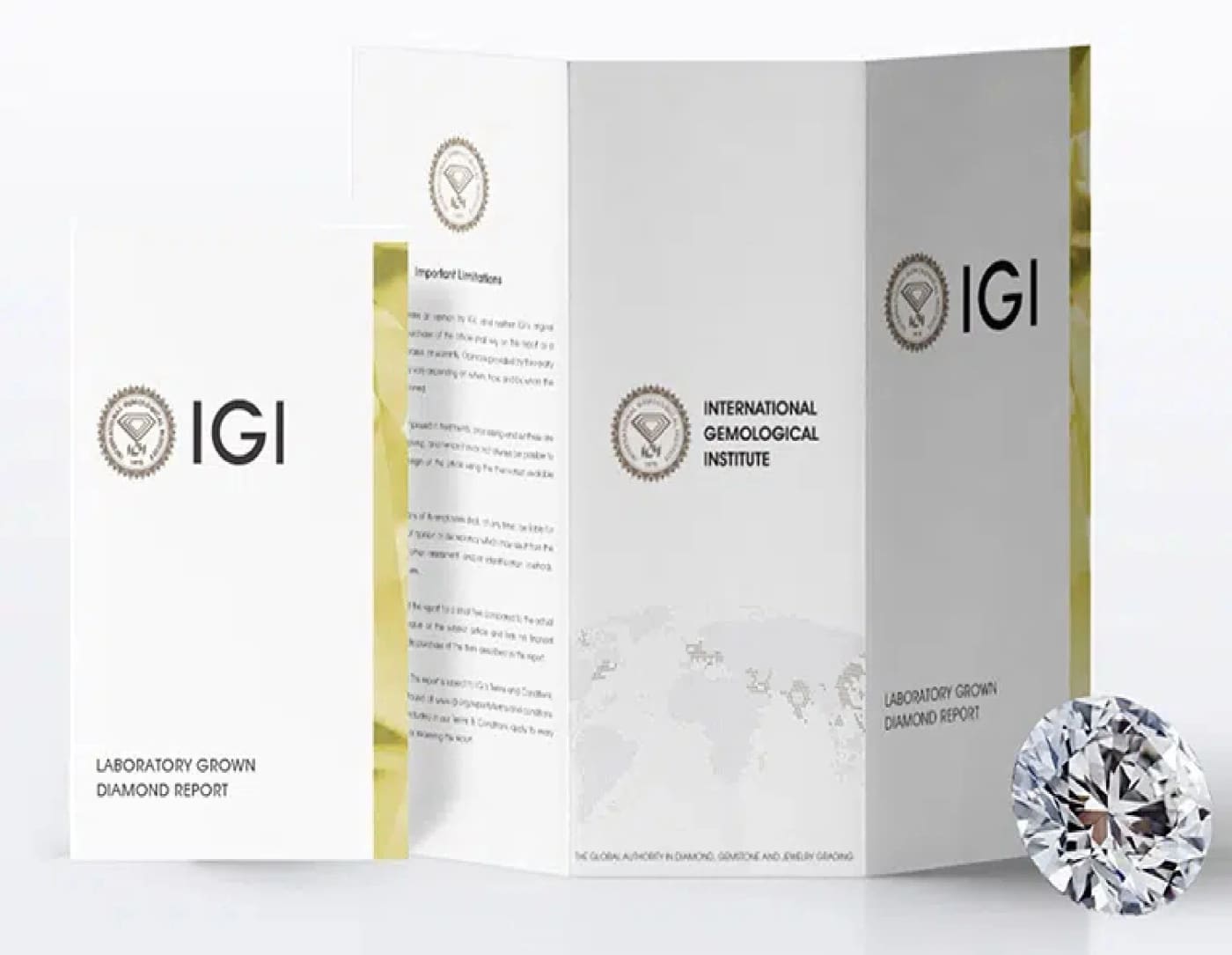
When we began LIRÈNE, the first decision we made was not about design. It was about trust. Every diamond we set would carry a certificate from IGI — the International Gemological Institute — or it would not be set at all.
A certificate tells you what you are actually holding: the cut, the colour, the clarity, the carat. It tells you whether the stone is lab-grown or mined. It tells you it is real. Without it, a diamond is a story. With it, it is a fact.
This matters more with lab-grown stones, where the conversation is newer and the questions are sharper. IGI does not sell stones and does not sell jewellery. It grades them. That independence is the entire point — the institute has no reason to flatter a stone, because it has nothing to gain from the sale.
What a report actually says
Open an IGI report and the first thing you will find is the origin: laboratory-grown or natural. Then the four characteristics that decide how a diamond behaves in light. Cut, which governs how light enters and returns. Colour, graded from D through the alphabet as warmth creeps in. Clarity, describing the inclusions formed as the crystal grew. And carat, which is weight rather than size — two stones of identical weight can look quite different across the finger.
Of the four, cut is the one we weigh most heavily. A larger stone cut carelessly will sit dull on the hand; a smaller one cut precisely will not stop moving. Weight is the easiest number to sell and the least interesting to wear.
The report also carries the stone's own identifier, laser-inscribed on the girdle and readable under magnification. It is how your diamond can be matched to its paperwork years from now, by a jeweller who has never met us.
How we use it when we buy
Certification does not choose stones for us. It sets the floor beneath the choosing. We work directly with diamond merchants, and every stone we are offered arrives with its report — which means we can compare like for like rather than take anyone's word for what is in front of us.
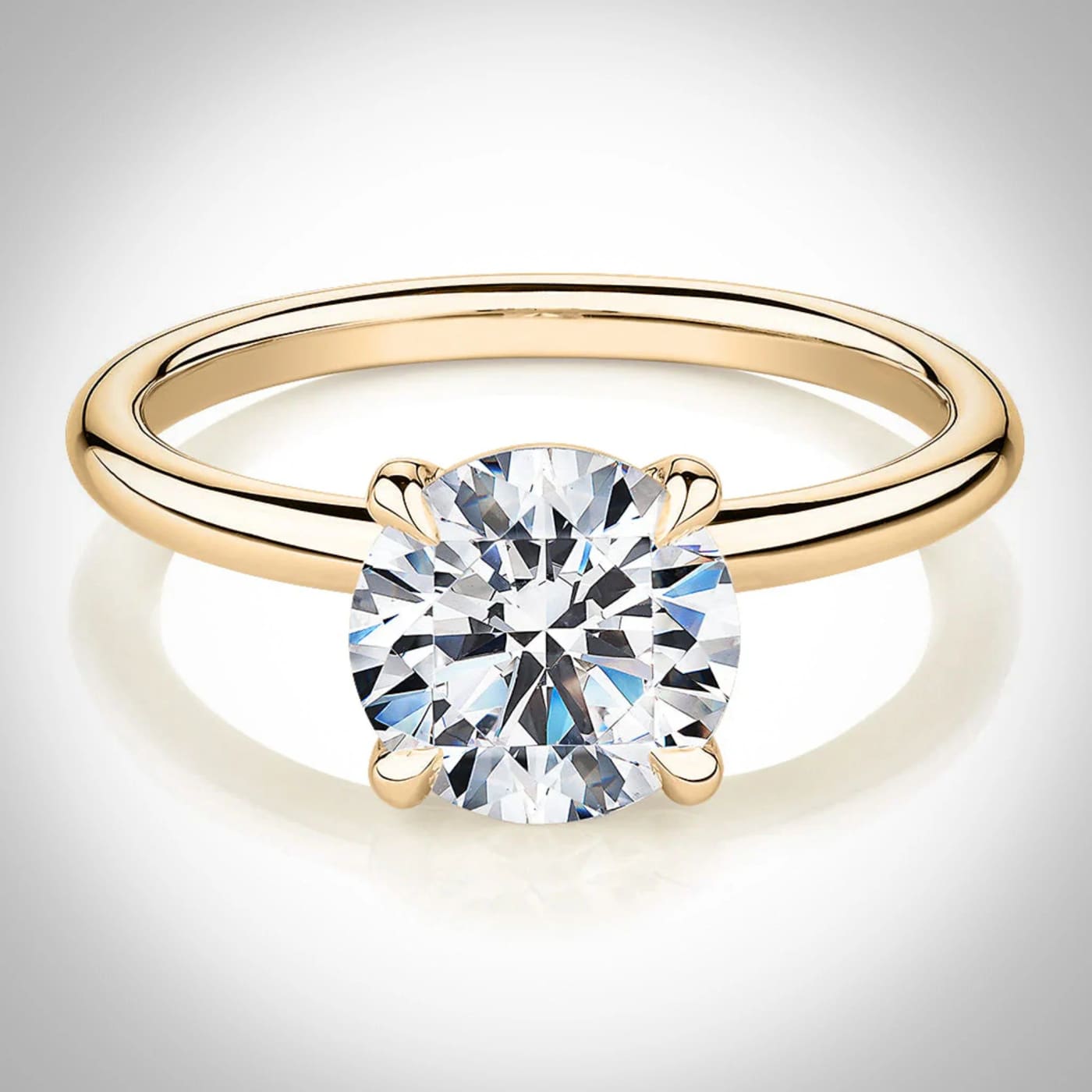
In practice, that changes what we can do for a client with a fixed budget. Because the grading is independent, we can move confidently across the range: trading a colour grade the eye cannot detect in a yellow gold setting for meaningfully more presence on the hand, or holding clarity where a stone is destined for a solitaire and has nowhere to hide.
It also means we can say no. A stone that grades well on paper but looks lifeless in the hand does not get set, and a stone with a report we cannot verify does not get bought.
Where moissanite sits
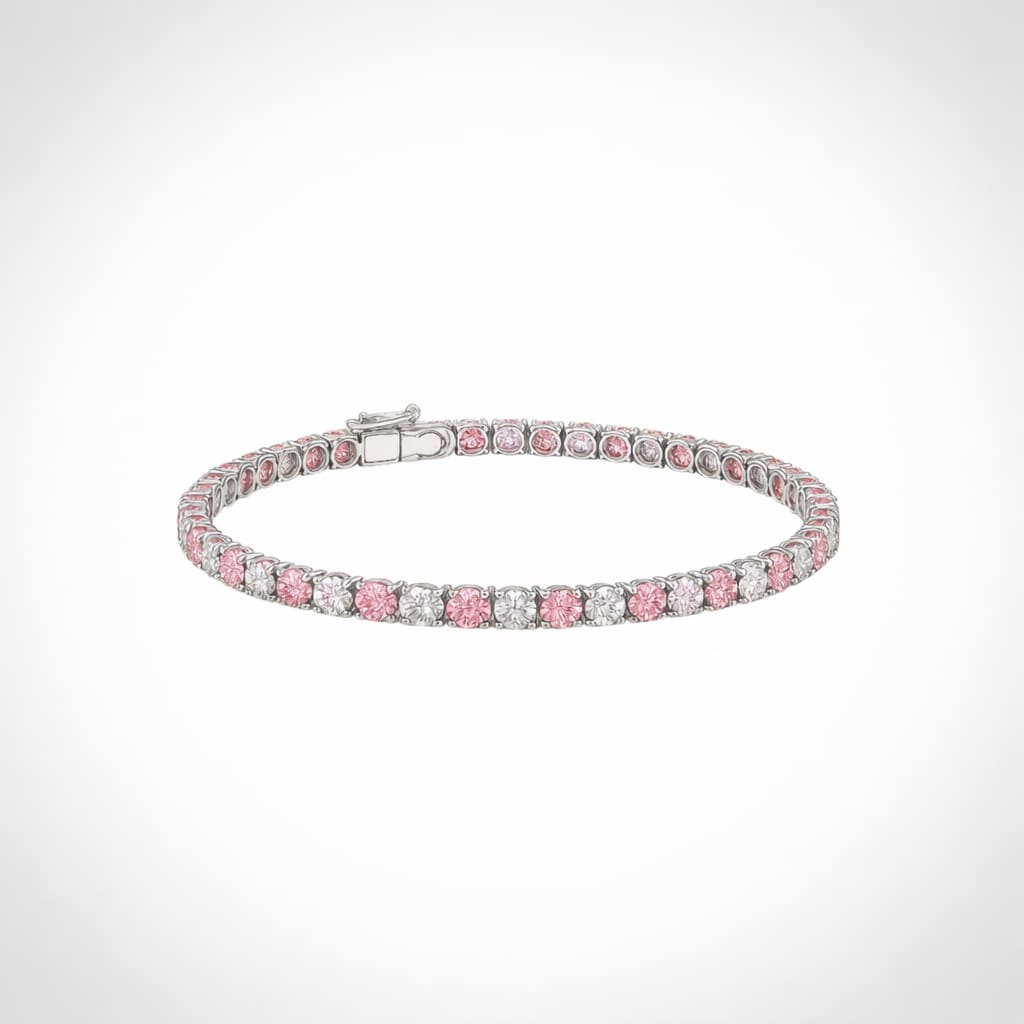
Not everything we make is a diamond. Moissanite is its own stone — brilliant, hard-wearing, and considerably more accessible — and we set a great deal of it, particularly in the tennis bracelets and vermeil pieces.
Moissanite is graded and hand-matched for fire and clarity, but it is not diamond-certified, and we will not imply otherwise. Every moissanite piece on this site is labelled as moissanite, priced as moissanite, and described as moissanite. A client who chooses it should know exactly what they are choosing and why — that is the whole of the transaction.
The certificate travels with the piece
So when your piece arrives, its report arrives with it. Keep it. It is part of the object — proof that what you wear is exactly what we said it was, and the document any independent jeweller or insurer will ask to see.
We think this is the least a jeweller can offer. Not a promise about a stone, but the evidence for it.