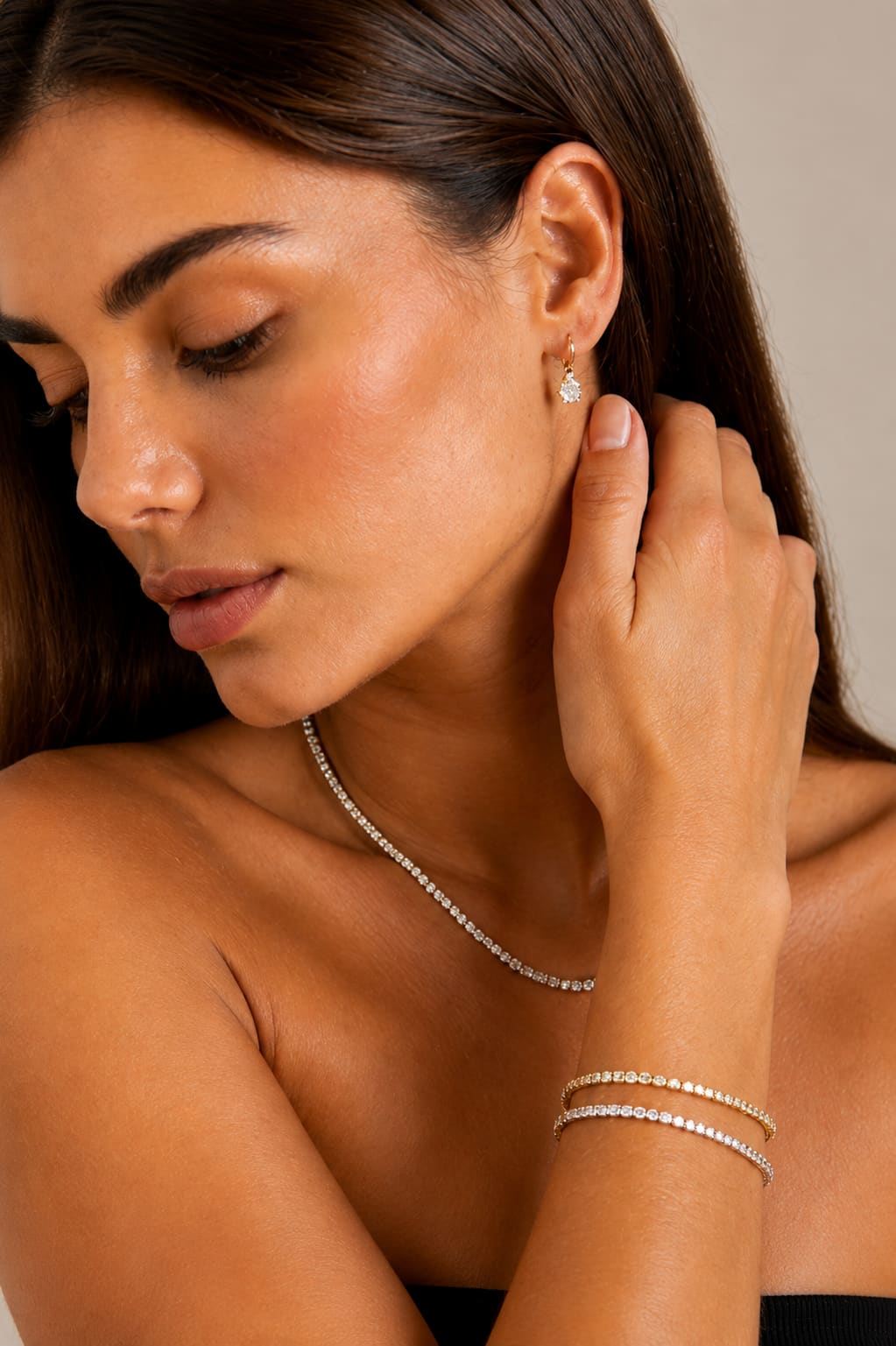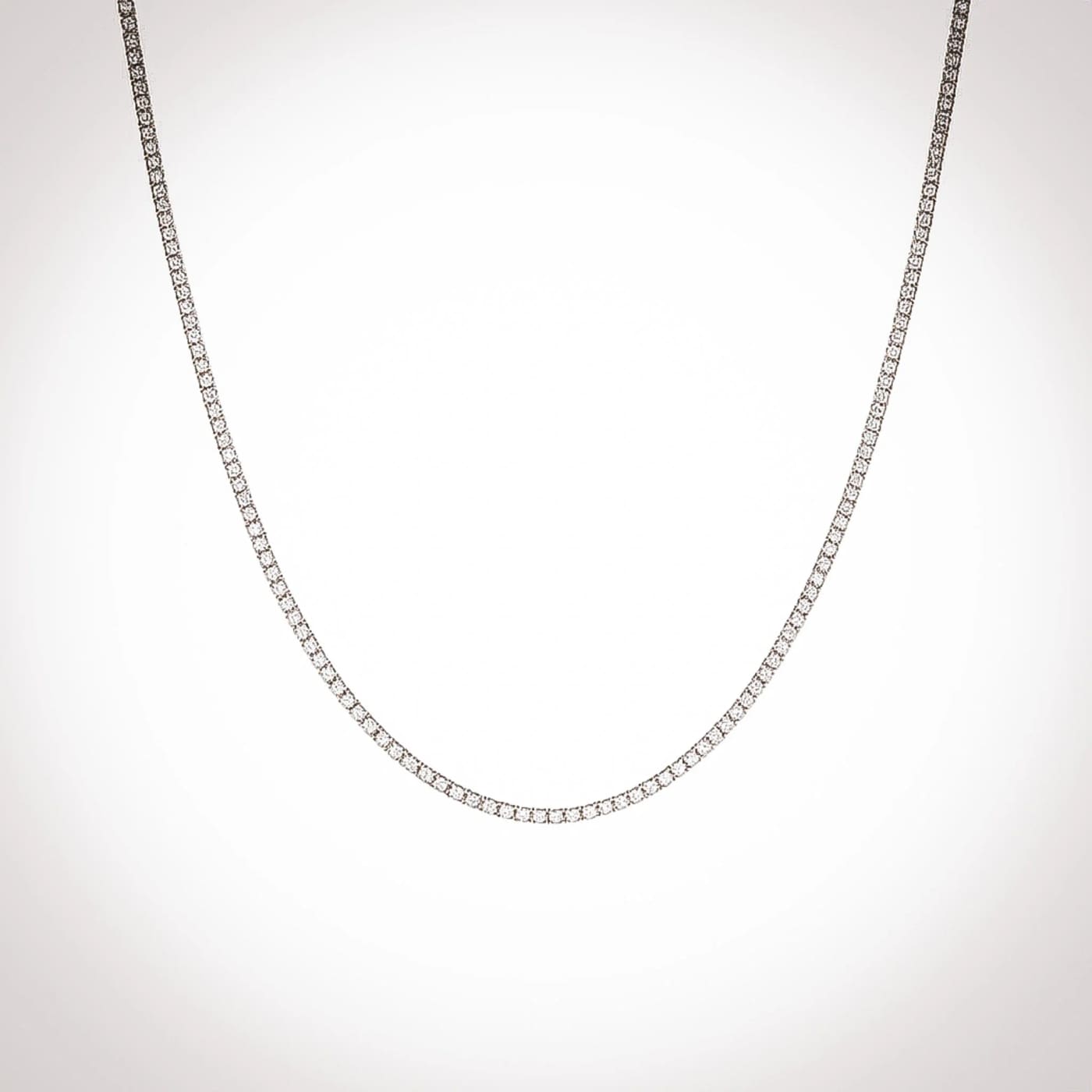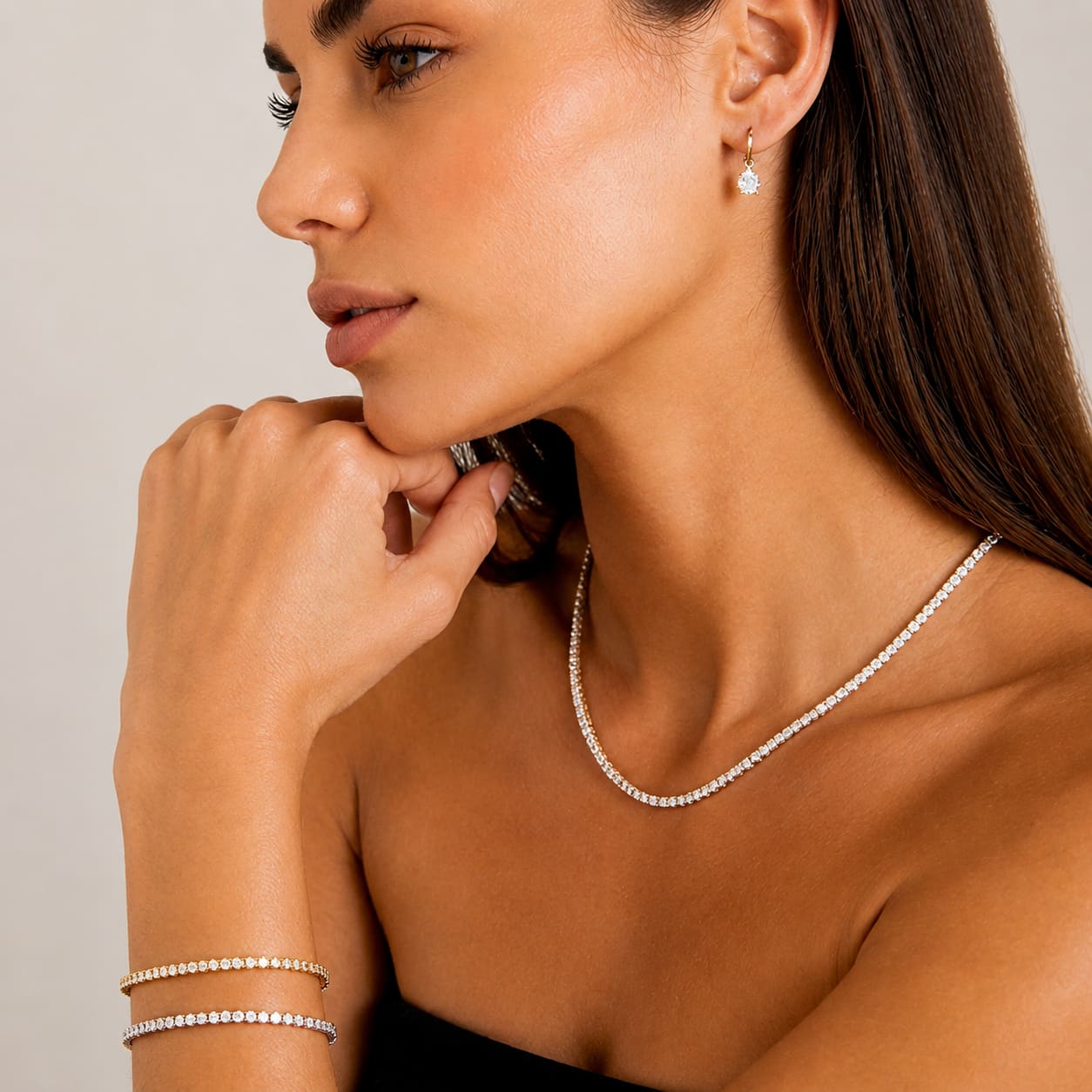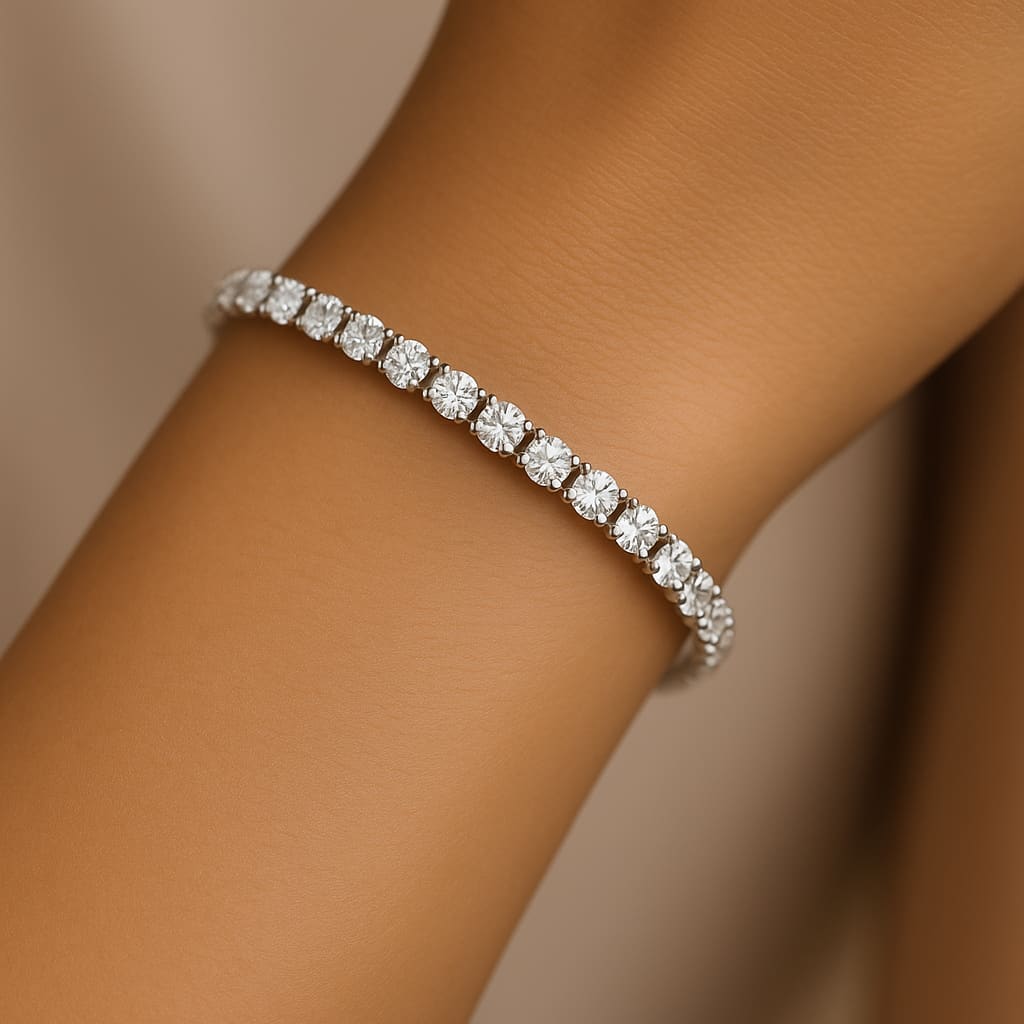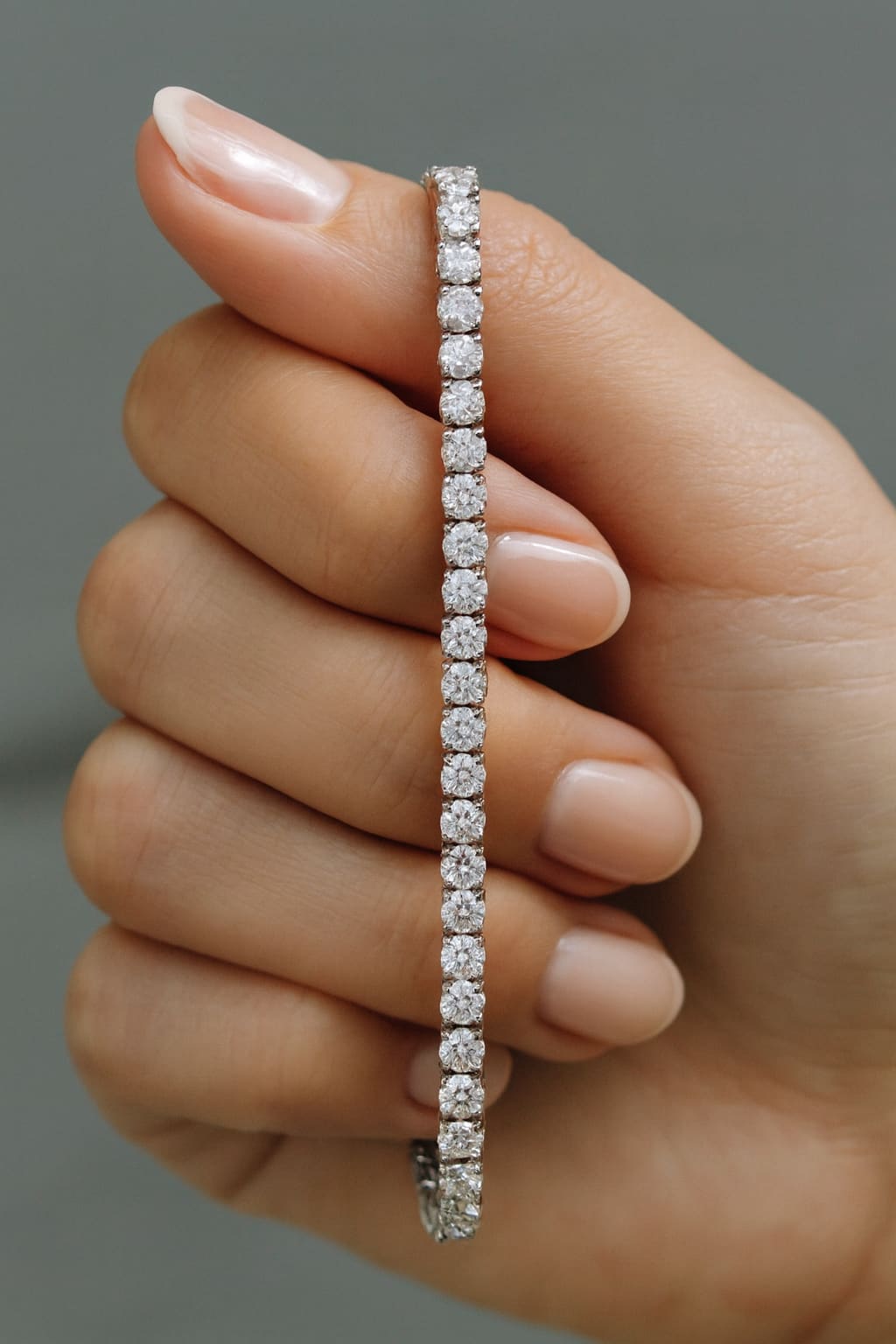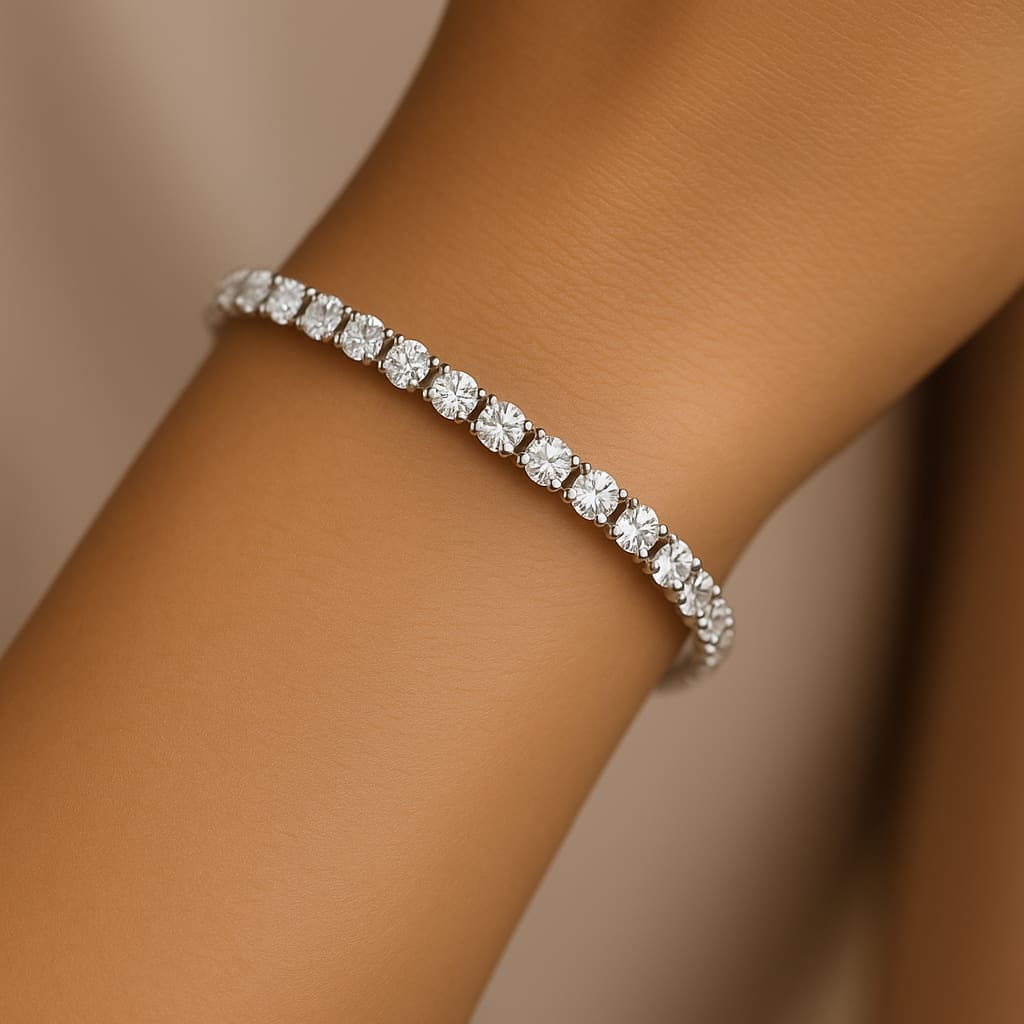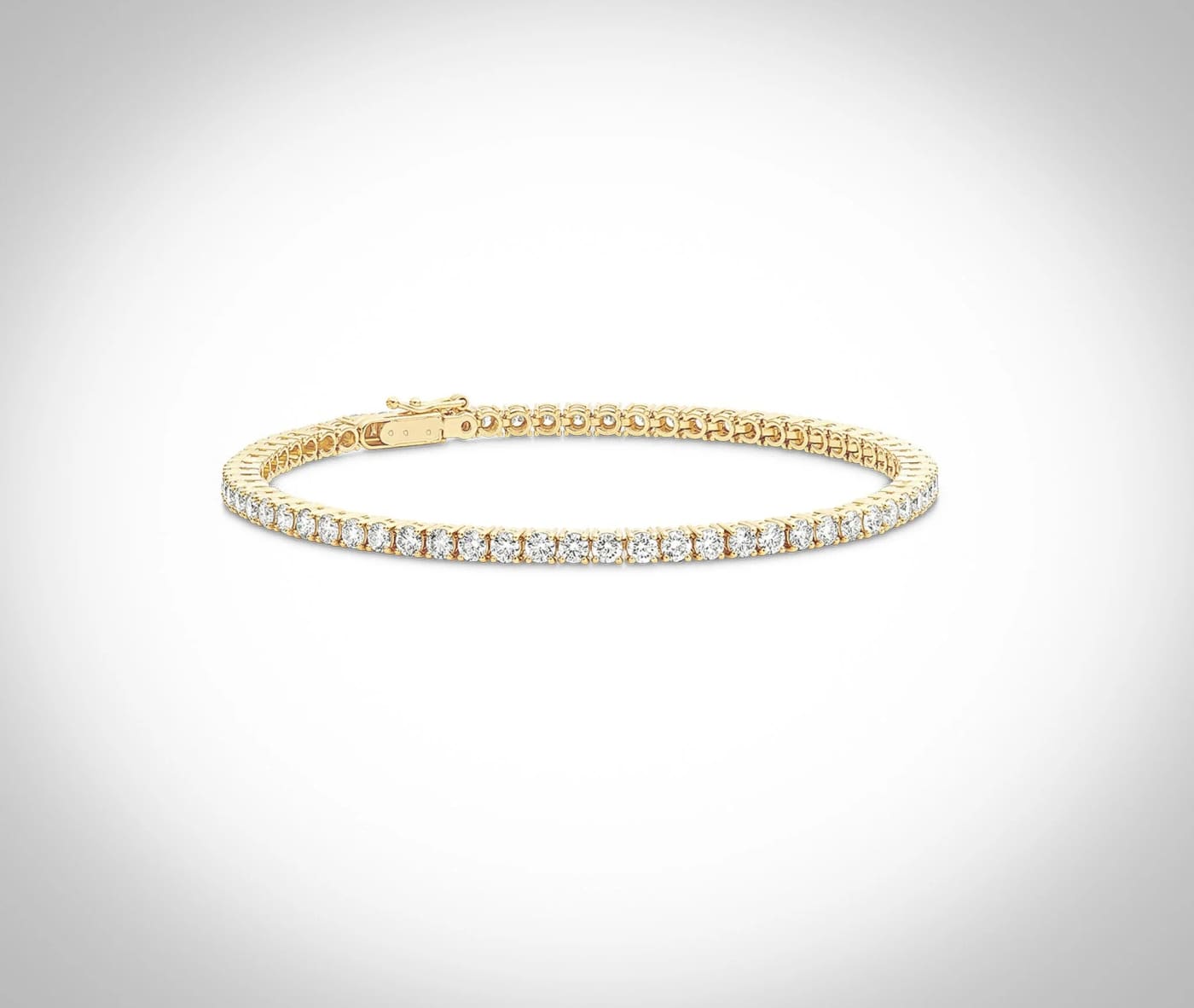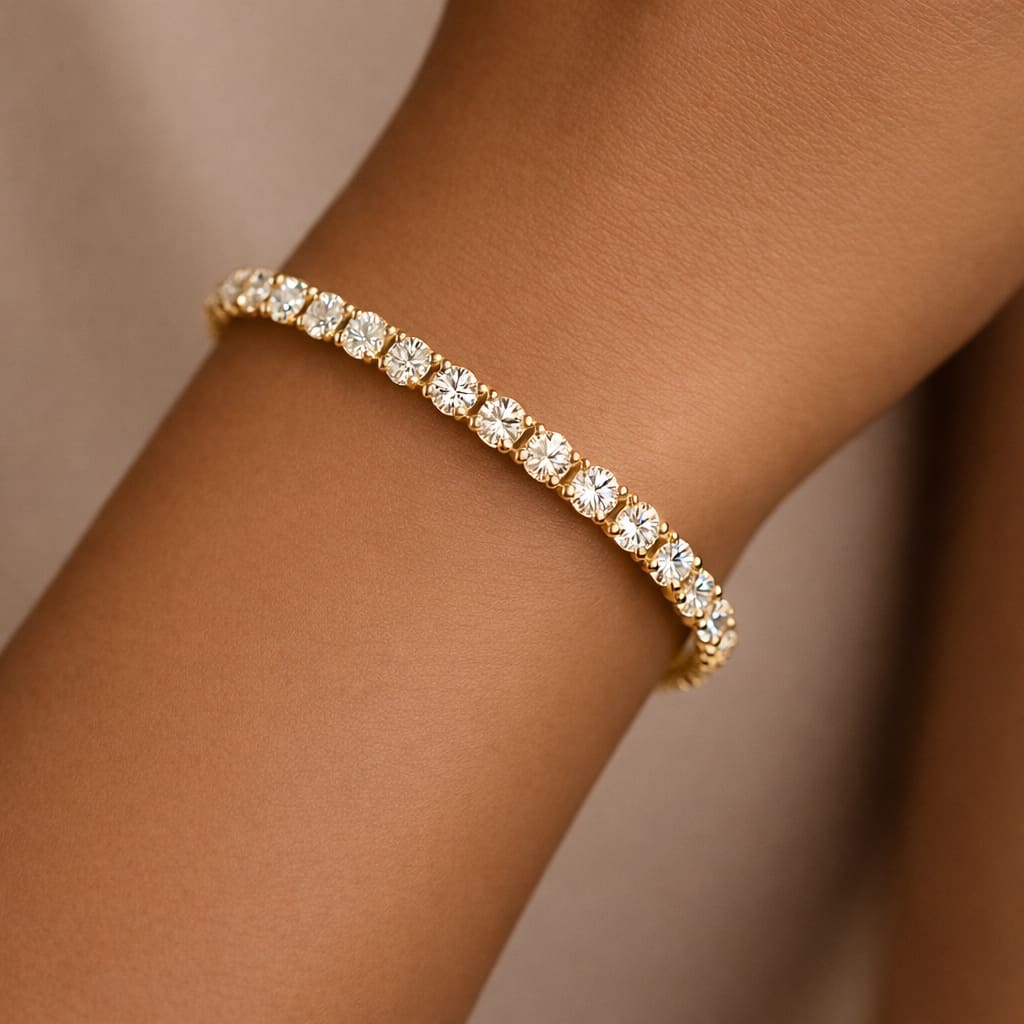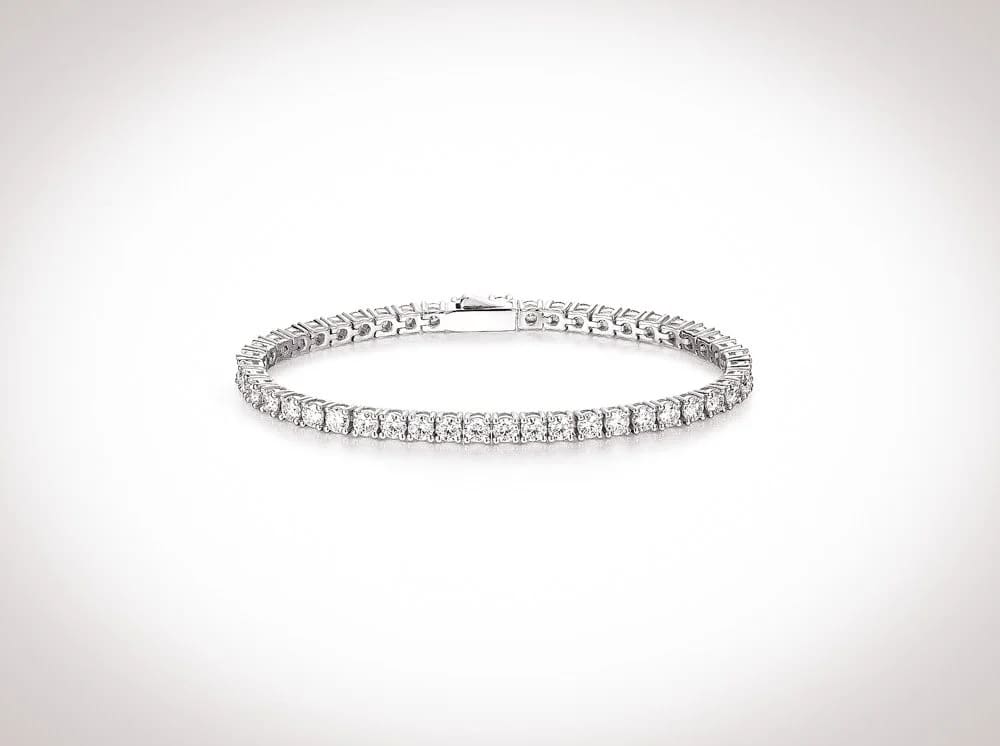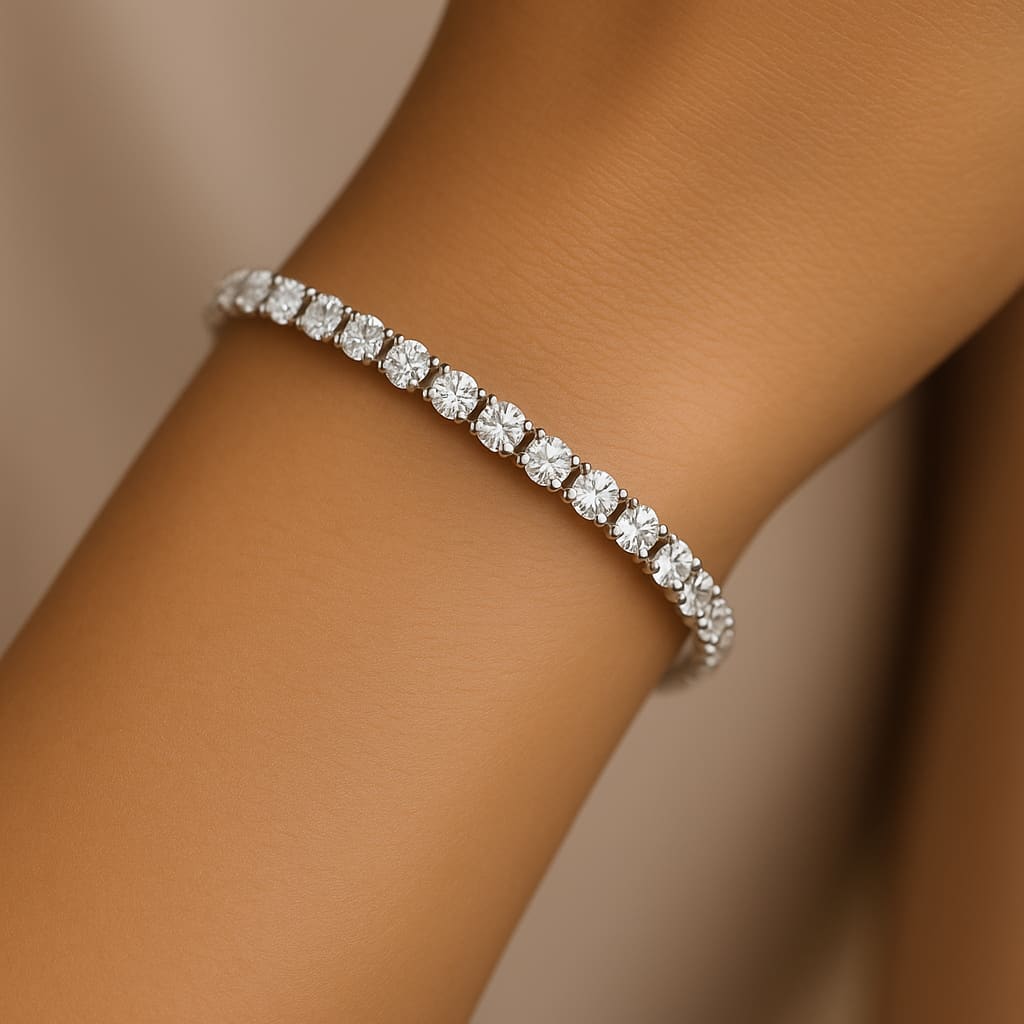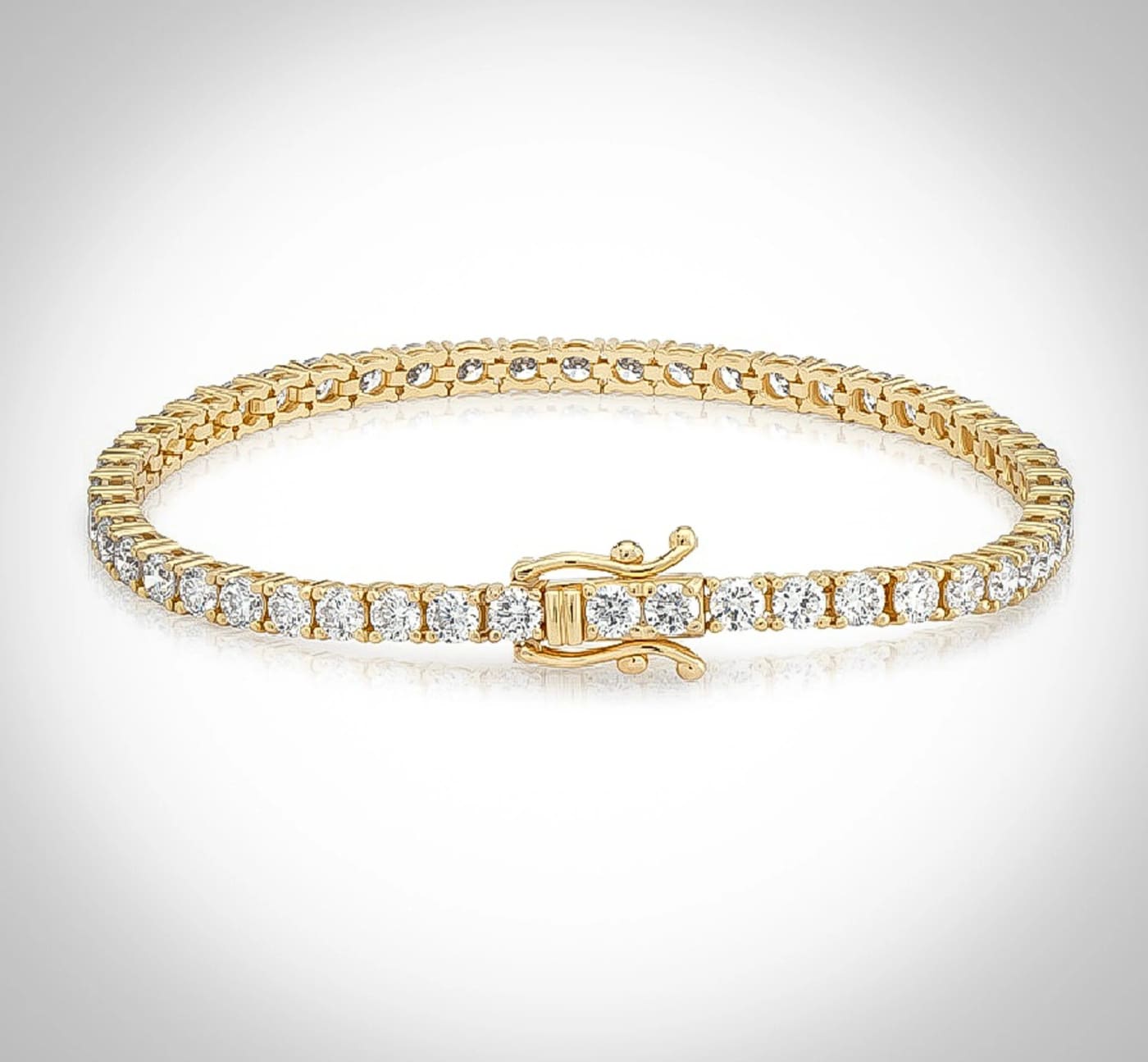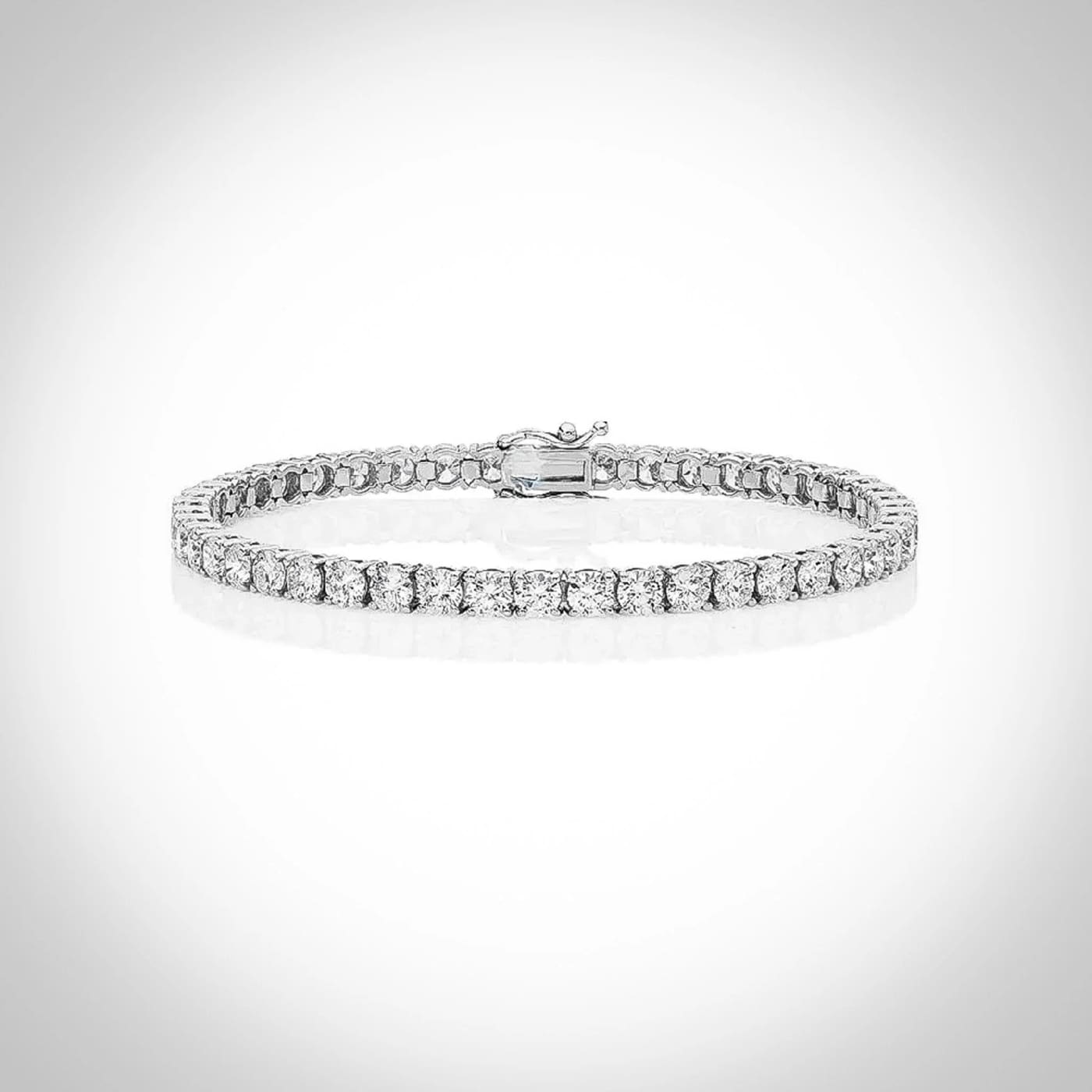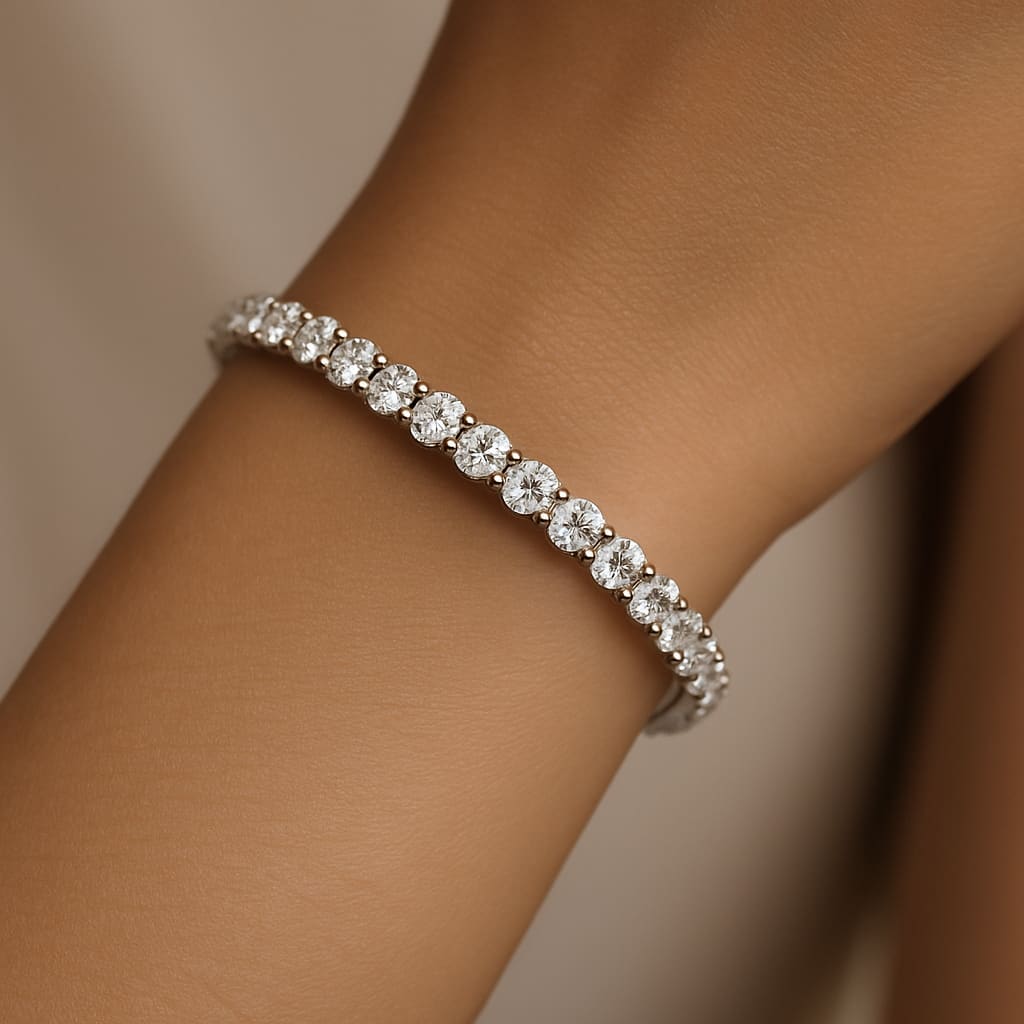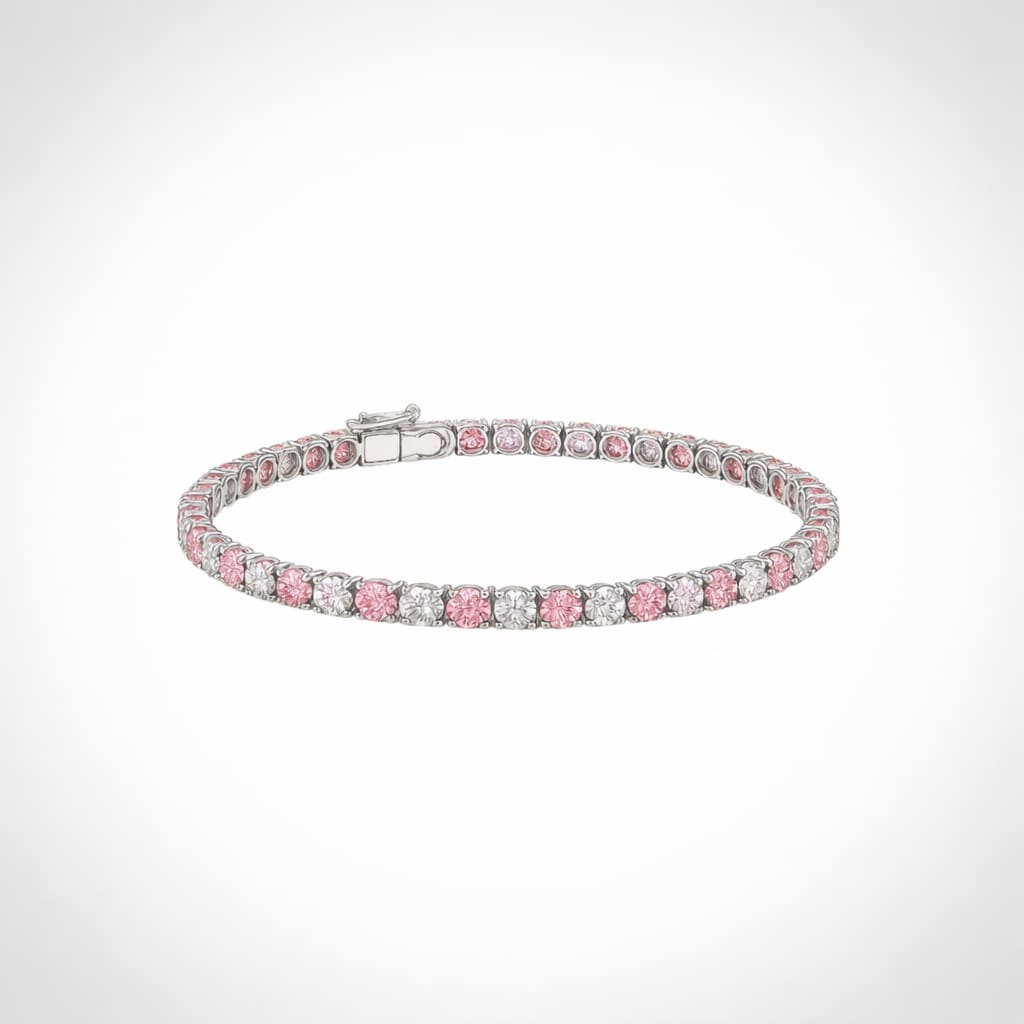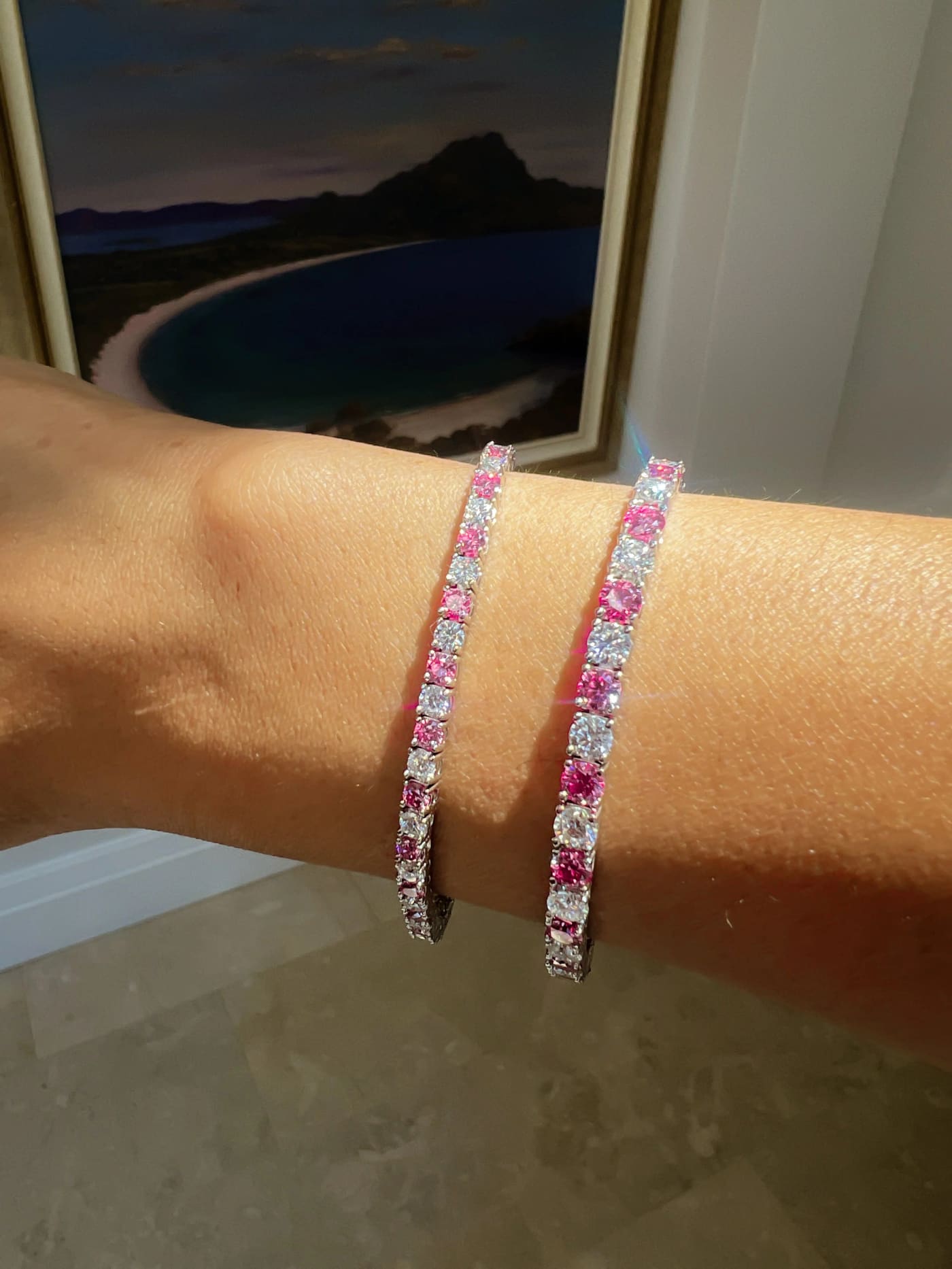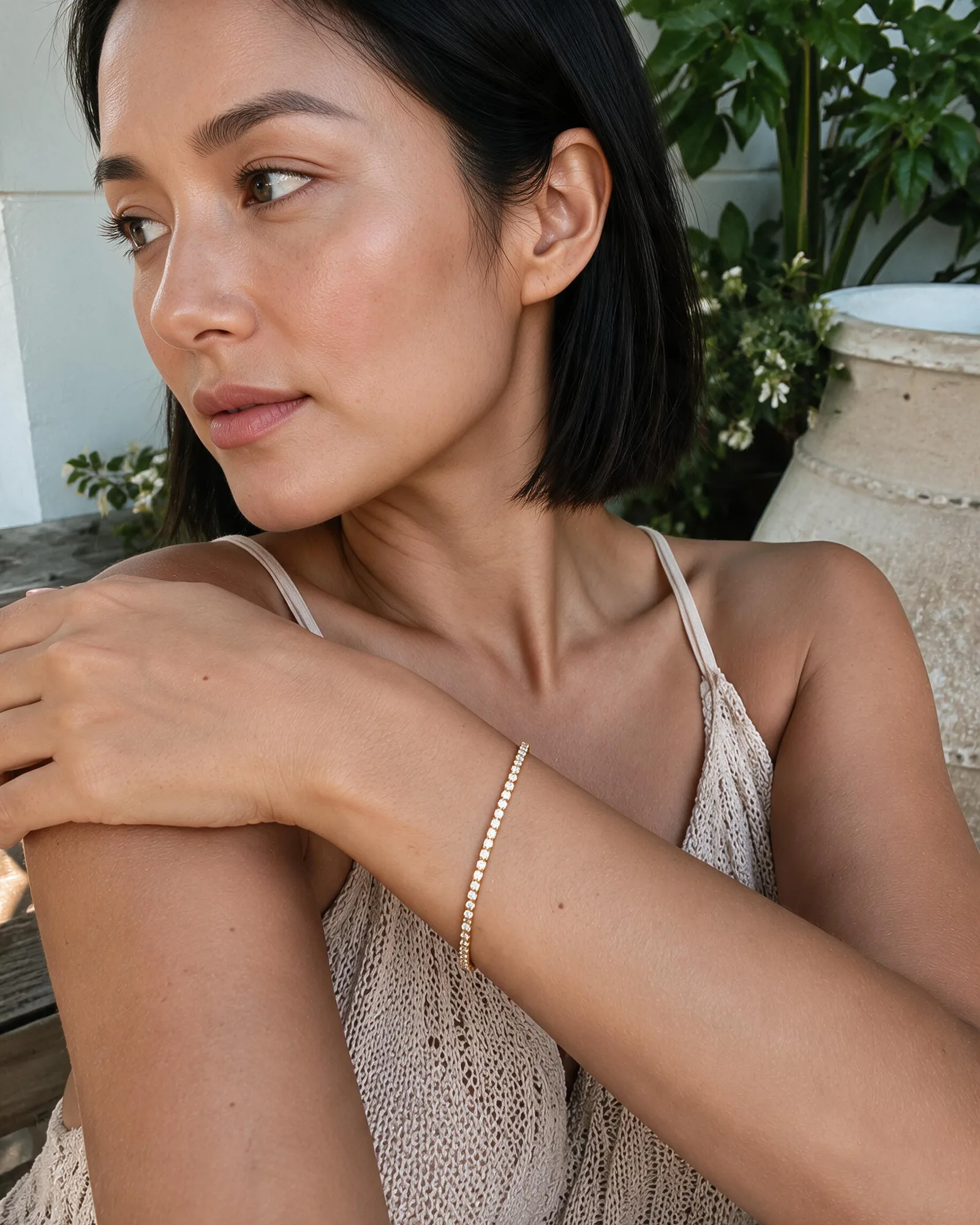
The tennis bracelet is the most demanding simple thing in jewellery. There is nowhere for a badly matched stone to hide.
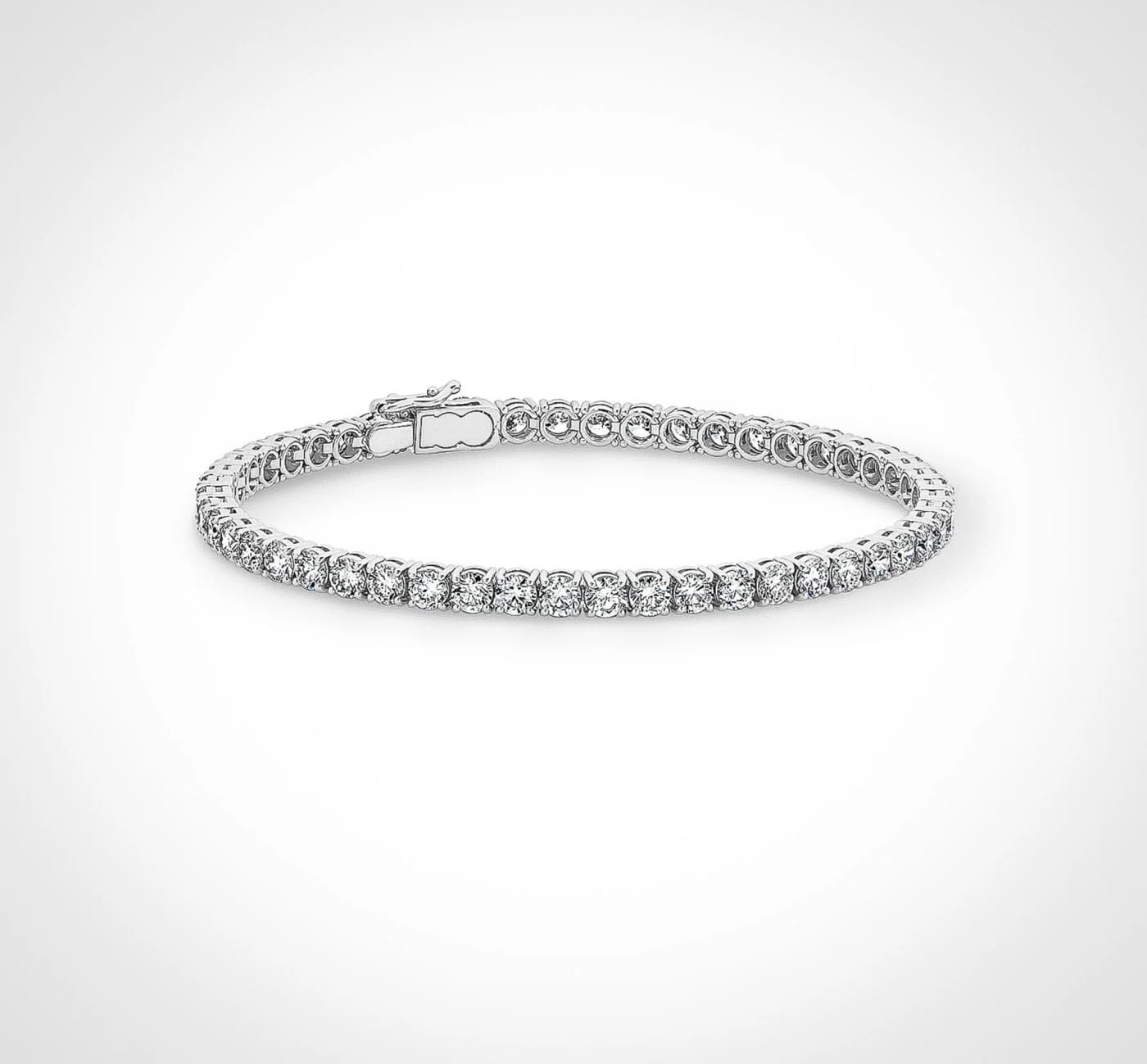
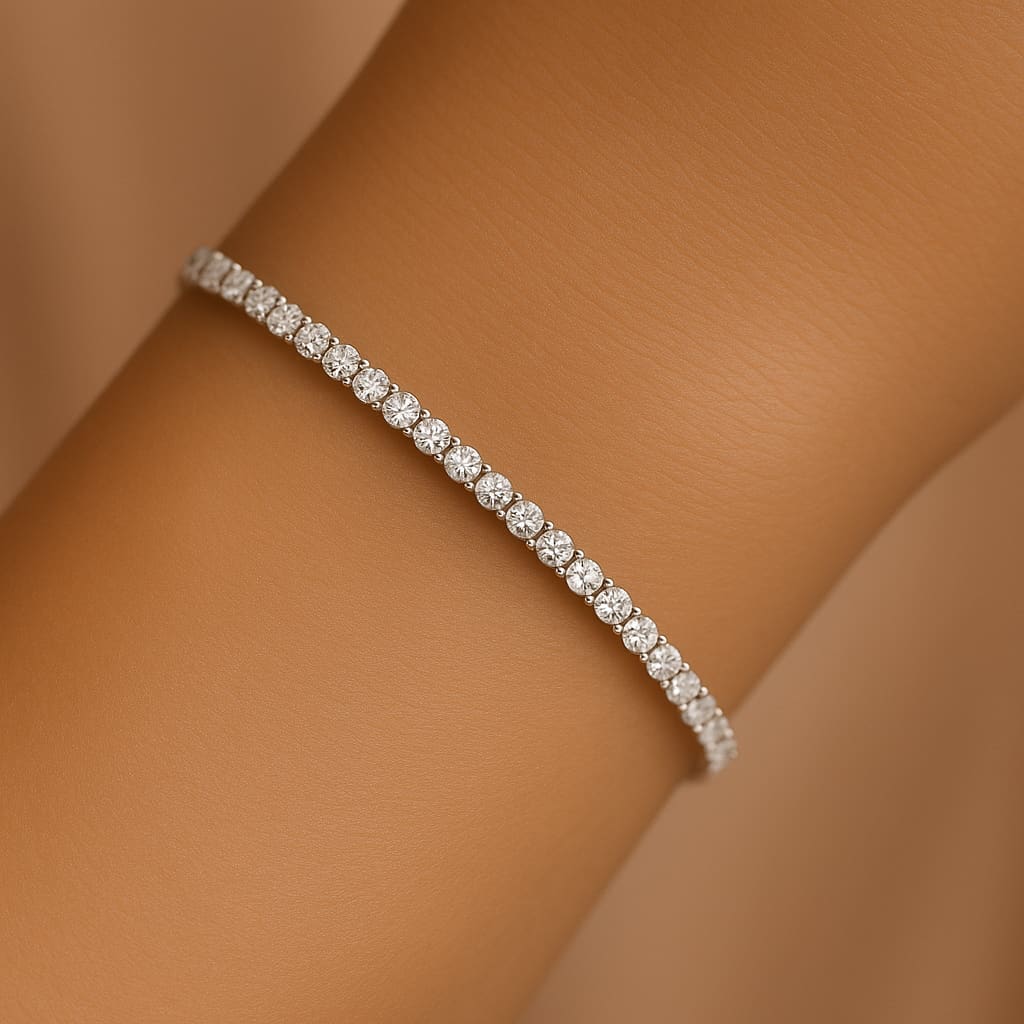
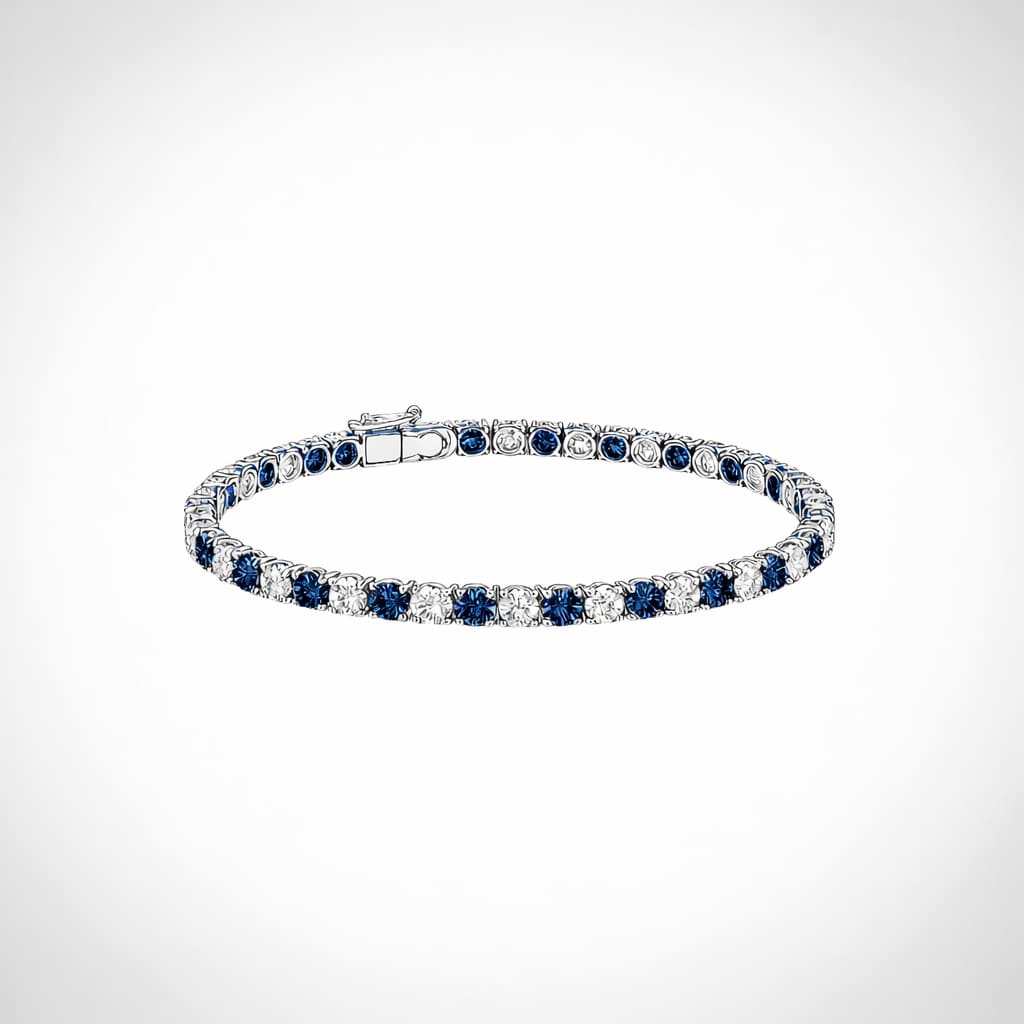
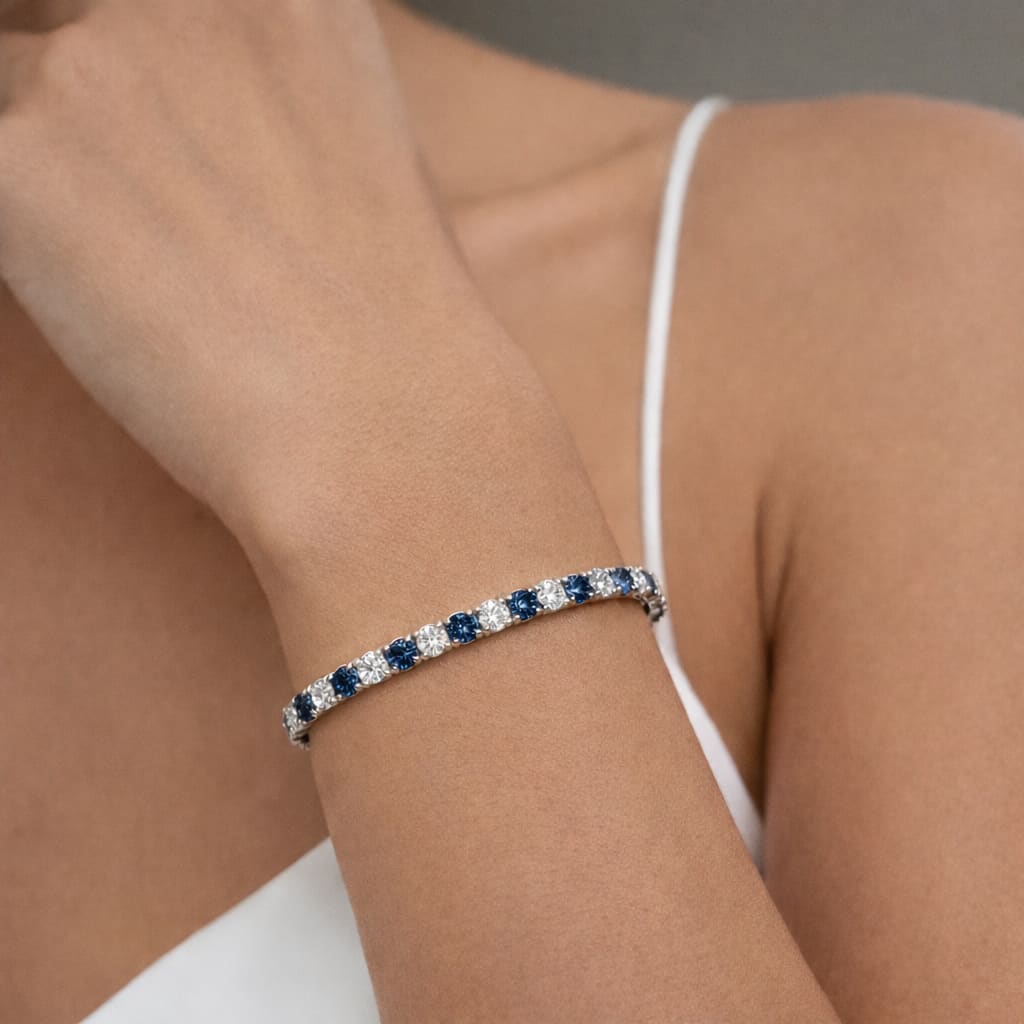
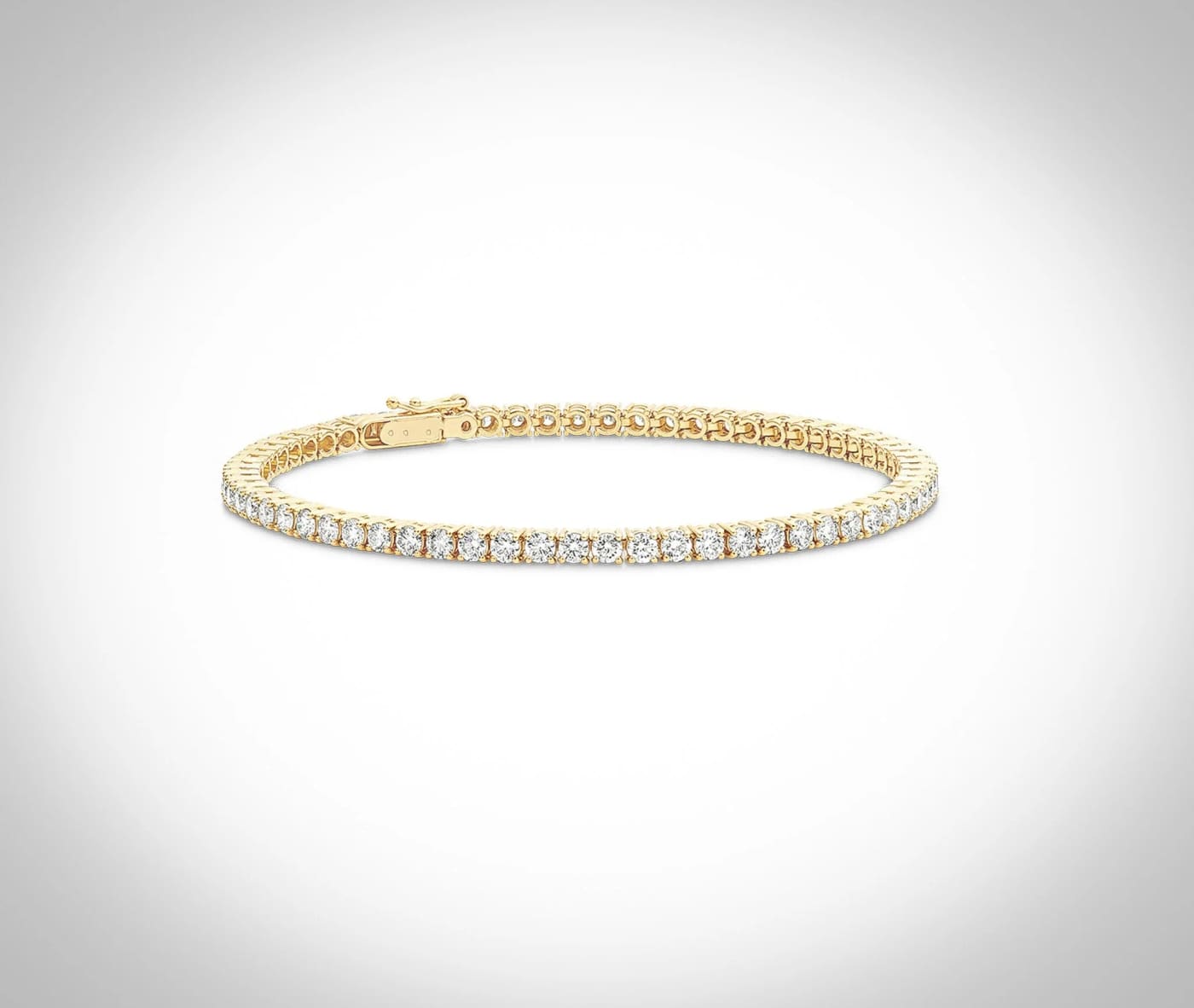
A tennis bracelet is a continuous line of stones of near-identical size, colour and cut, set in a flexible chain that follows the wrist. Because the stones sit side by side, any variation between them is immediately visible — one stone slightly warmer in colour, or a fraction off in size, and the whole line reads as uneven. This is why the matching matters more than the individual stone, and why we make each one to order rather than assembling from stock.
Choosing a stone size
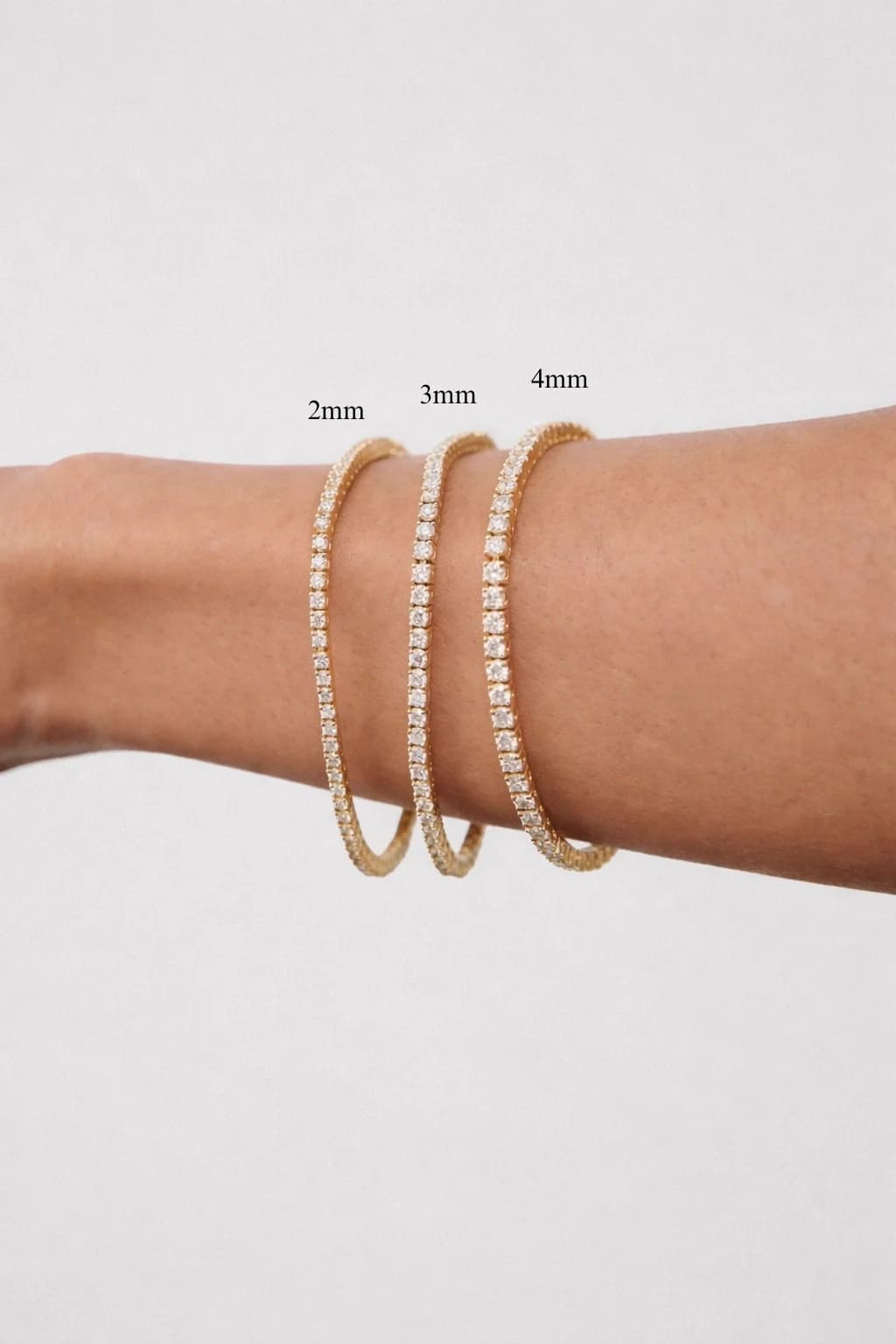
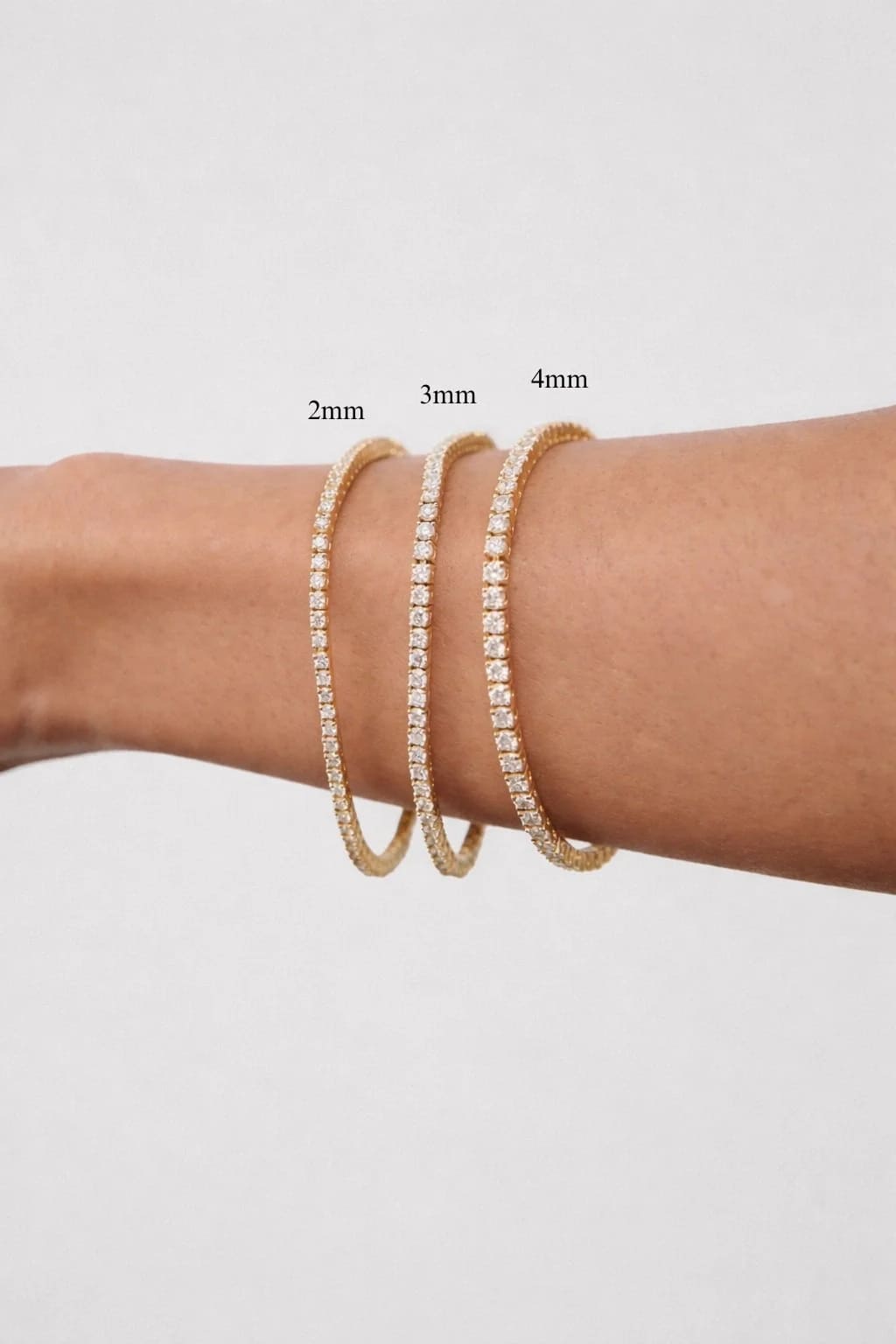
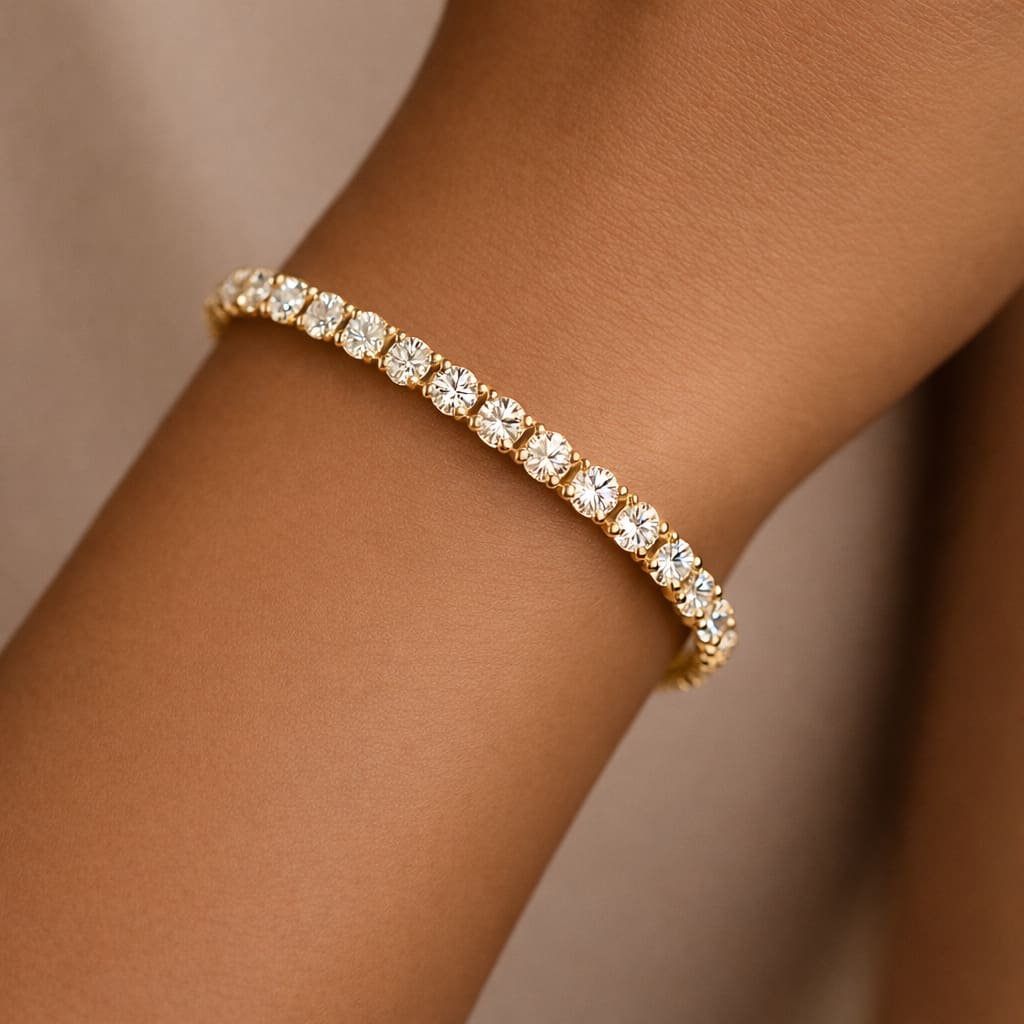
Stone diameter is the decision that changes everything else — presence, weight and price all move with it. As a rough guide:
- 2mm — quiet and everyday. Reads as a line of light rather than as individual stones. Layers easily with a watch.
- 3mm — the most versatile. Visible across a room without announcing itself.
- 4mm — clearly a statement, still comfortable under a sleeve.
- 5mm and above — unmistakable. Worn on its own.
If you are buying a first tennis bracelet and cannot decide, 3mm is the size people re-wear most.
Lab-grown diamond or moissanite
We make both, and they are honestly different propositions. Lab-grown diamonds are diamonds — same material as mined, IGI certified, graded stone by stone. On a tennis bracelet, where you may be setting fifty or more stones, that certification is what guarantees the line is consistent.
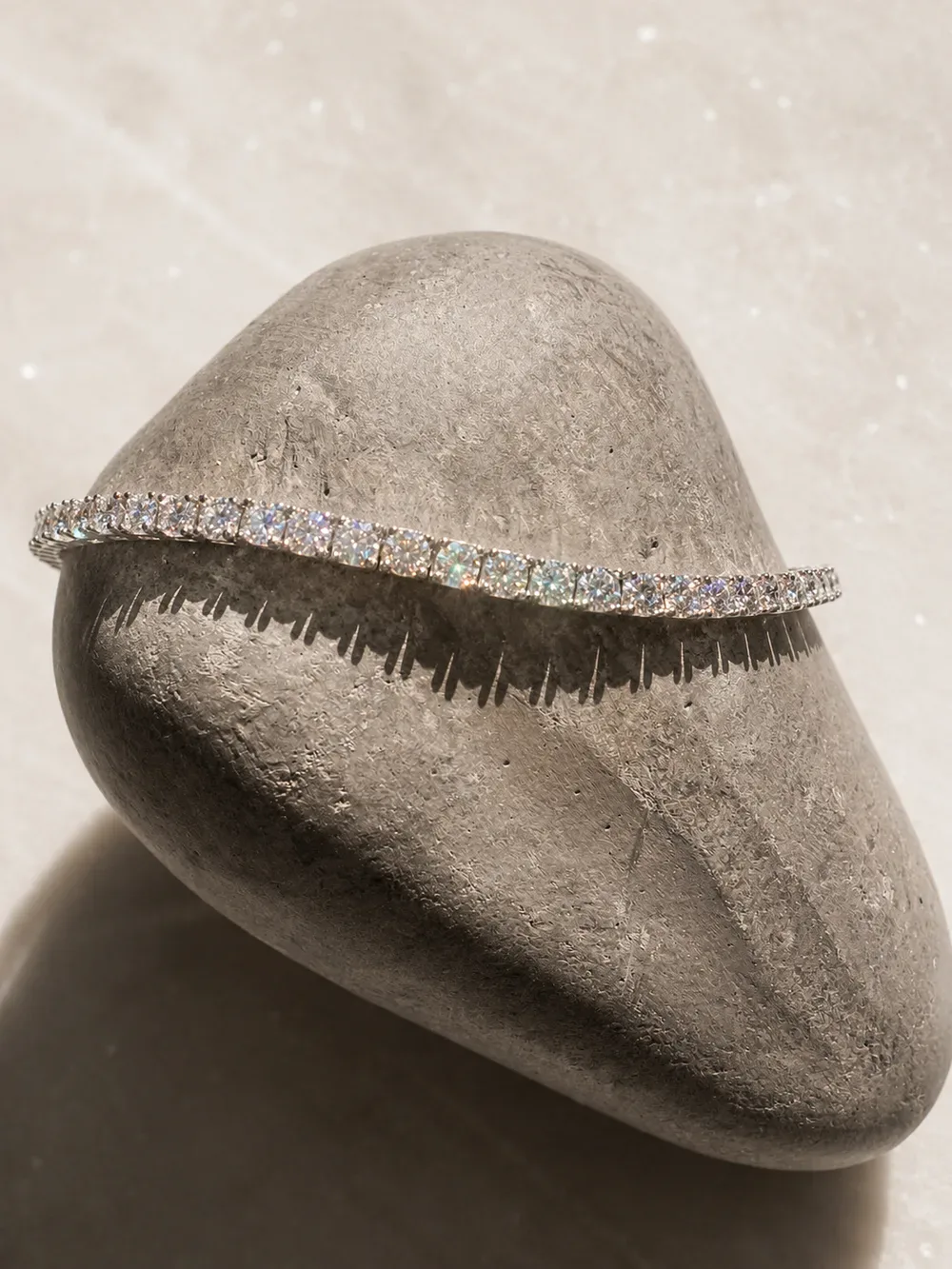
Moissanite is a different mineral, silicon carbide, and it is not a diamond. It is harder than almost anything except diamond, and it returns more coloured light — noticeably more fire, which some people love and some find too much. Our moissanite is hand-matched and graded for cut and clarity, but it is not IGI diamond-certified, because it is not a diamond. It costs substantially less, and for a wide bracelet that difference is significant.
Solid gold or vermeil
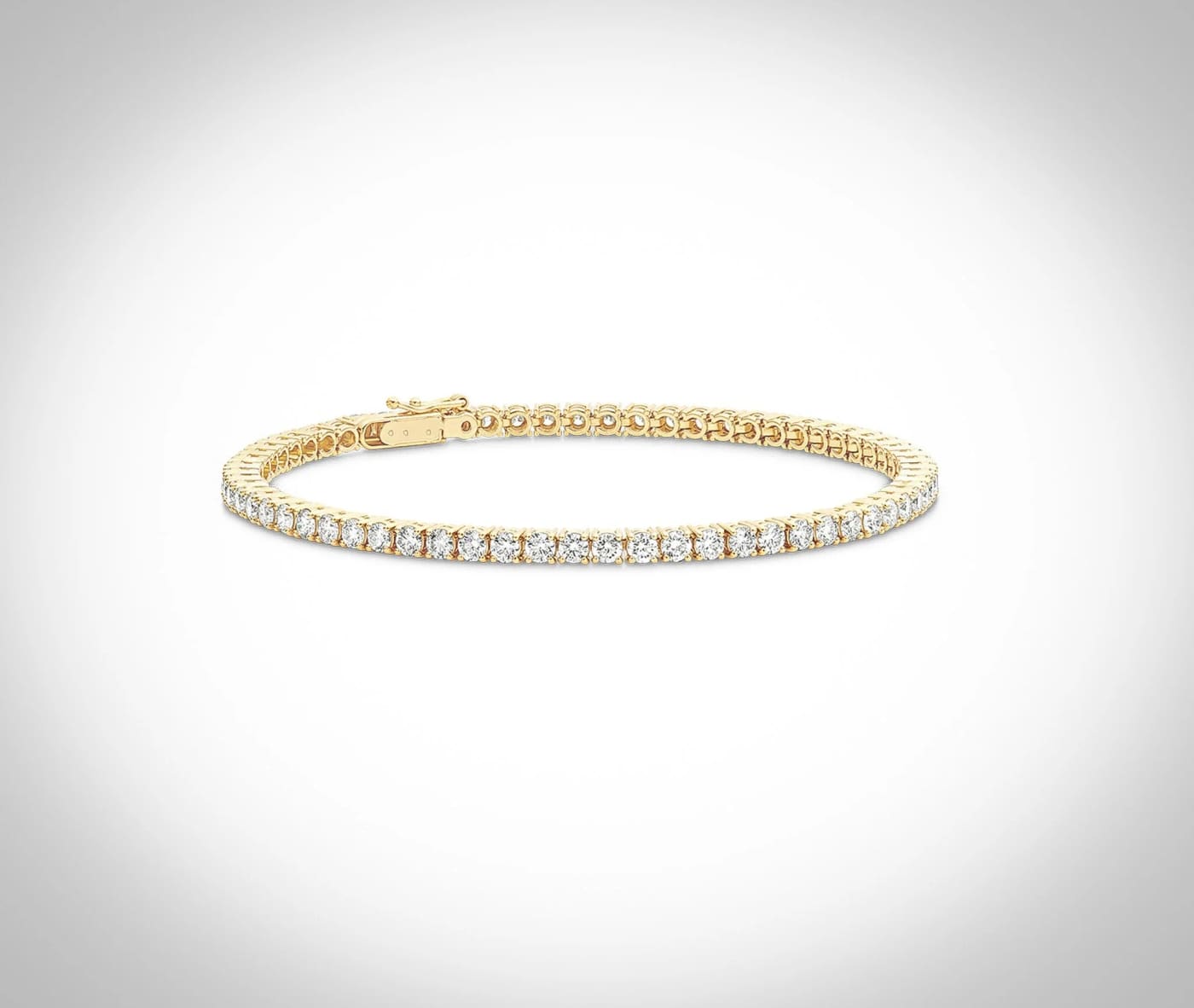
Solid 18K gold is gold throughout. It can be resized, repaired and re-polished indefinitely, and it will outlast you. 18K vermeil is a heavy layer of gold over sterling silver — a genuine precious-metal piece, considerably lighter on price, and the sensible choice if you want scale without the outlay.
Vermeil does wear at contact points over years of daily use, and a bracelet is a high-contact piece. If it will be on your wrist every day for a decade, solid gold is the more economical decision in the end. If it is for occasions, vermeil is not a compromise.
Fit, and why we ask for a measurement
A tennis bracelet should move on the wrist but not spin freely — roughly a centimetre of room beyond your wrist measurement. Too tight and it sits rigid across the bone; too loose and the clasp works its way to the underside and the line turns over.
Because each is made to order, we build to your measurement rather than removing links from a standard length. Measure snugly around the wrist bone with a strip of paper and a ruler, or come to us with the bracelet you already wear and we will match it.
Wearing and keeping one
Take it off for the gym, the pool and the sea — chlorine and salt are hard on the settings, not the stones. Warm water, a drop of unscented soap and a soft brush restores most of the brightness people assume is lost. Have the settings checked every couple of years; a tennis bracelet lives its life being knocked against desks and door handles, and a loose stone caught early is a small repair.